
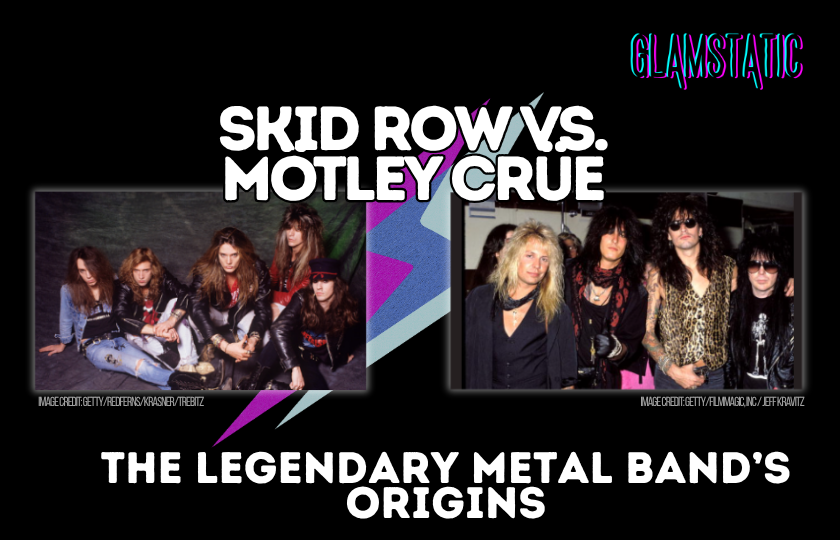
Skid Row vs Motley Crue is a debate that never seems to get old. Both bands became major names during the glam metal boom, but they took very different paths. Mötley Crüe built a reputation on excess, attitude, and an unforgettable run of albums. Skid Row brought a harder edge, bigger vocals, and a more aggressive sound.
So, who wins? The answer depends on what you value most. If you want cultural impact and longevity, Mötley Crüe has the edge. If you care about vocals, songwriting, and sheer musical power, Skid Row makes a very strong case.
Let’s break down the two bands and see how they compare.
Skid Row vs. Mötley Crüe: The Basic Comparison
Mötley Crüe formed in Los Angeles in 1981 with Nikki Sixx, Tommy Lee, Mick Mars, and Vince Neil. Their early records helped define the loud, dangerous image of the Sunset Strip. Albums such as Too Fast for Love and Shout at the Devil established the band’s sound and image.
Skid Row arrived later. The band formed in New Jersey in 1986 and released its self-titled debut in 1989. Sebastian Bach joined as lead vocalist before the debut, alongside guitarists Dave “The Snake” Sabo and Scotti Hill, bassist Rachel Bolan, and drummer Rob Affuso.
That timing matters. Mötley Crüe helped build the glam metal world. Skid Row entered that world when the formula was already established and pushed it toward heavier territory.
The Sound: Which Band Was Heavier?
If the question is which band sounded heavier, Skid Row wins.
Mötley Crüe could be aggressive, especially on Shout at the Devil. Still, much of the band’s appeal came from its groove, hooks, and hard-rock swagger. Skid Row often sounded closer to traditional heavy metal.
Songs such as “Monkey Business,” “Slave to the Grind,” and “Youth Gone Wild” show that difference. Skid Row used heavier riffs without losing the catchy choruses that made glam metal so successful.
Mötley Crüe, meanwhile, excelled at creating songs that felt huge and immediate. “Kickstart My Heart,” “Dr. Feelgood,” and “Girls, Girls, Girls” are built around simple, memorable ideas.
So, if you want heavier guitars, Skid Row gets the point. If you want slick hard-rock hooks, Mötley Crüe has the advantage.
The Vocals: Sebastian Bach vs. Vince Neil
This might be the easiest category to call.
Sebastian Bach was one of the most powerful singers in glam metal. His range, volume, and ability to shift from a clean high note to a gritty scream gave Skid Row a major advantage.
Vince Neil has a distinctive voice, and his nasal delivery became an important part of Mötley Crüe’s identity. His voice fits the band’s sleazy, punk-influenced hard-rock sound perfectly.
However, pure vocal ability is another matter.
Bach could belt, scream, and handle demanding melodic lines with ease. Songs such as “18 and Life,” “I Remember You,” and “Wasted Time” show how much his voice added to Skid Row’s music.
For vocals, Skid Row wins.
See: Who is Skid Row?
Embed from Getty ImagesThe Albums: Skid Row vs. Mötley Crüe
Mötley Crüe has the deeper album catalog.
Too Fast for Love introduced the band with a raw, punky sound. Shout at the Devil expanded that sound and turned the group into a major metal act. Theatre of Pain brought the band even further into the mainstream, while Girls, Girls, Girls leaned into their sleazier side.
Then came Dr. Feelgood. The album became the band’s biggest commercial success and produced some of its best-known songs.
Skid Row’s catalog is smaller, but its peak was extremely strong. Skid Row went multi-platinum and produced several enduring songs. The follow-up, Slave to the Grind, went even further musically.
In fact, Slave to the Grind made history as the first heavy metal album to debut at No. 1 on the Billboard 200. It also showed that Skid Row could become heavier without abandoning its songwriting instincts.
Mötley Crüe wins for consistency and longevity. Skid Row wins for the strength of its first two major albums.
The Songs: Who Had the Better Hits?
This is where things get interesting.
Mötley Crüe has an enormous collection of recognizable songs. “Live Wire,” “Looks That Kill,” “Home Sweet Home,” “Dr. Feelgood,” and “Kickstart My Heart” are all staples of classic hard rock.
Skid Row had fewer mainstream hits, but the band’s best songs are hard to dismiss. “Youth Gone Wild” is a glam metal anthem. “18 and Life” became one of the band’s biggest hits. “I Remember You” remains one of the era’s most memorable power ballads.
Skid Row also had a heavier songwriting style. “Monkey Business” and “Slave to the Grind” helped separate the band from many of its glam metal peers.
For sheer number of iconic songs, Mötley Crüe wins. For variety and vocal performance, Skid Row can absolutely compete.
Embed from Getty ImagesThe Image and Attitude Skid Row vs. Motley Crue
Mötley Crüe wins this category easily.
The band did not simply make glam metal music. It helped create the mythology surrounding the genre. The makeup, leather, hair, stage shows, parties, controversies, and larger-than-life personalities all became part of the Mötley Crüe brand.
Skid Row had attitude, too. The band looked like a glam metal act, but its music often felt more rebellious and aggressive. Still, it never developed quite the same cultural mythology.
Mötley Crüe understood the entertainment side of rock at an exceptional level. That helped the band become bigger than its records.
The Live Show
Both bands built their reputations as live performers, but they approached the stage differently.
Mötley Crüe made spectacle part of the experience. Tommy Lee’s drum performances, elaborate production, and the band’s outrageous stage presence became central to its identity.
Skid Row relied more heavily on raw energy. Sebastian Bach was an especially commanding frontman, and his voice gave the band a huge live presence.
If you want spectacle, Mötley Crüe wins. If you want raw vocal power and intensity, Skid Row has the argument.
Influence and Legacy
Mötley Crüe has the larger overall legacy.
The band’s influence reaches beyond music. Mötley Crüe became a symbol of 1980s rock culture, and its story has been revisited through books, documentaries, and the Netflix film The Dirt.
Skid Row’s legacy is more focused on the music itself. The band helped show that glam metal could be genuinely heavy without losing its commercial appeal. Slave to the Grind remains an important example of that balance.
Mötley Crüe influenced the culture of glam metal. Skid Row helped push the sound forward.
So, Who Wins: Skid Row or Mötley Crüe?
After comparing the two bands, there is no single answer.
Mötley Crüe wins for cultural impact, longevity, spectacle, and the sheer number of iconic songs. The band helped define the glam metal era and remains one of the genre’s most recognizable names.
Skid Row wins for vocals, heaviness, and the strength of its early songwriting. Sebastian Bach gave the band a weapon that few of its peers could match, while albums like Skid Row and Slave to the Grind still sound remarkably powerful.
If you are choosing the more important glam metal band, Mötley Crüe probably takes the crown.
If you are choosing the better pure rock band, though, Skid Row has a very real case.
And that is what makes Skid Row vs Motley Crue such a fun debate. Both bands represented different sides of glam metal. Mötley Crüe perfected the spectacle. Skid Row brought the muscle.
Ultimately, you don’t have to choose just one. Put on Shout at the Devil, follow it with Slave to the Grind, and enjoy both bands at their best.

Facebook Comments